
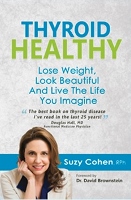
 Thyroid Healthy (2014) is a book that advises how to improve your thyroid health.
- Eat a paleo-like diet – low carbohydrate, gluten-free, high protein, vegetables, seaweed, real salt.
- Avoid processed foods, caffeine, alcohol, soy, vegetable oil.
- Limit cruciferous vegetables.
Below is a description of the food recommendations in the diet. What to eat | Foods to avoid. There’s a lot more in the book.
Use this page as a cheat sheet alongside the book. Send this page to friends, family, and anyone else who you want to understand what you’re eating on this diet.
Get a copy of Thyroid Healthy for thyroid basics, enzymes and vitamins/minerals, nutrient deficiencies, supplements to use and avoid, testing, ways your doctor misdiagnoses you, and thyroid medication discussion.
The reasoning behind Thyroid Healthy
The book says that improving and balancing your thyroid hormone function can improve many aspects of general health and feeling well. The food contribution to improved thyroid health is to restore nutrients which have been “mugged” by drugs such as statins, birth control pills, and acid blocking pills. If you eat a nutritionally naked diet of refined foods, you deplete your minerals then you can’t convert that T4 to precious T3, which is what so many people with thyroid issues need to do. No matter how much thyroid medicine you take, it will never get activated or into your cells unless you have adequate levels of minerals.
It’s assumed that when you take a medication you will absorb it but if you have impaired gut function, an undiagnosed infection or low acid in your stomach, then you will not get the full benefit of your medication. Heal the gut first, and your medication will work much better, so will your supplements.
Thyroid Healthy diet plan – what to eat and foods to avoid
Foods to eat in Thyroid Healthy
Optimally, adopt a Paleo Diet.
Here are some specific recommendations:
- Choose organic foods wherever possible
- Proteins
- Include protein in every meal – either eat it or take a protein shake
- Liver – for iron
- Seafood (not high mercury) – for many minerals
- Turkey breast
- Eggs
- Cow’s milk products, occasionally (from grass-fed animals raised without antibiotics or hormones) (note that casein may be better avoided for some people)
- Vegetables
- Dark green vegetables – for minerals in general (limit cruciferous vegetables)
- Seaweeds – for many minerals
- Mushrooms
- Other whole vegetables
- Nuts and seeds
- Organic nuts and seeds
- Flour alternatives
- Rice flour, almond flour, coconut flour, chickpea flour, hemp flour
- Fats and oils, fatty foods
- Cow’s milk products, occasionally (from grass-fed animals raised without antibiotics or hormones). Ghee is fine if it’s the absolute highest quality clean ghee. Cheese is best avoided or at least minimized. (Note that casein may be better avoided for some people)
- Coconut oil
- Olive oil, tea seed oil, grapeseed oil
- Beverages
- Green tea
- Whole foods
- Instead of eating apple pie, eat an apple. Instead of potato chips, eat a potato
- Foods high in natural iodine
- Himalayan salt
- Celtic salt or French Grey Sea Salt
- “Real” salt by Redmond
- Seaweeds – e.g. kelp, dulse flakes, kombu
- Spirulina, e.g. Hawaiian Spirulina by Nutrex Hawaii
- Seafood such as herring, salmon, sardines, cod. Get wild caught seafood
- Potato with the peel
- Cow’s milk products like yogurt or milk – grass-fed organic (some people avoid this)
- Turkey breast
- Cranberries / cranberry juice – buy unsweetened and sweeten yourself using a natural sugar such as honey, unrefined turbinado sugar, coconut sugar, or stevia
- Foods high in selenium
- Seafood
- Clams, canned or fresh oysters, raw octopus
- Meats (chicken, lamb, turkey, free range game, etc)
- Mushrooms such as crimini or shitake
- Asparagus – okay if it’s cooked, broiled or seared
- Eggs
- Spinach
- Nuts
- Foods rich in tyrosine
- Protein of all sorts – game meats, poultry, fish, steak, and eggs
- Some excellent vegan sources include avocados, bananas, and pumpkin seeds
- Duck
- Fava Beans
- Eggs, specifically the egg white
- Hawaiian spirulina
- Kidney beans
- Spinach and other greens
- Seafood (orange roughy, tilapia, salmon, haddock, crustaceans, etc.)
- Seaweed like wakame
- Sesame seeds
- Foods rich in zinc
- Oysters
- Seafood and crustaceans such as lobster, shrimp, etc
- Natural cereals
- Miso soup (without MSG, not too much sodium)
- Spices such as freeze-dried parsley and chives
- Seeds and seed butters – Pumpkin seeds, sesame butter/tahini, sunflower seeds and sunflower butter, watermelon seed kernels
- Nuts – especially Brazil nuts, pine nuts, pecans, almonds, and walnuts – make sure you buy organic, and peel the skin from almonds
- Dried shiitake mushrooms
Foods to avoid or limit with Thyroid Healthy
- Refined and processed foods
- Processed junk foods
- White flour
- Artificial sweeteners and colors
- GMO foods
- Olestra (fat substitute often used in “light” potato chips) – “mugs” vitamin D
- Grains
- In general, reduce carbohydrates
- Gluten grains – wheat, rye, barley, spelt
- Other grains as well, e.g. amaranth, corn, quinoa, rice (especially if you have Hashimoto’s)
- Avoid whole grains
- Dairy
- More specifically – casein, the protein in dairy (“mugs” zinc)
- Limit cheese
- High-mercury seafood – the mercury harms thyroid tissue
- Some legumes
- Soybeans (you can have edamame occasionally
- Soybean ‘foods’ such as soy meat substitutes, soy cheese
- Soy milk
- Lima beans can crash your thyroid
- Vegetable oil
- Cruciferous vegetables
- E.g. broccoli, Brussels sprouts, cabbage, cauliflower, kale, kohlrabi, mustard greens, rutabaga/swede, turnips
- Limit to fewer than 5 servings per week as they are considered goitrogens
- Caffeine
- Reduce or eliminate caffeine
- Chocolate, in excess (“mugs” zinc)
- White table salt
- Beverages
- Coffee and tea – “mug” iron from your diet
- Alcohol
- Sodas and energy drinks – watch out for brominated vegetable oil BVO – used as an emulsifier to stabilize sodas and some energy drinks
- Tap water – contains fluoride most of the time which reduces thyroid levels; also contains chlorine
- Bottled water – plasticizers from plastic bottles
- Soy milk
Health benefits claimed in Thyroid Healthy
The diet in this book claims to reduce the risks for: poor adrenal function / adrenal fatigue, anxiety, apathy, low body temperature, cold hands and feet, shortness of breath with little exertion, chronic fatigue, concentration difficulties, constipation, excessive cortisol, depression, fatigue, Graves’ disease, hair loss or thinning, Hashimoto’s thyroiditis / Hashi’s, hypochlorhydria / low stomach acid, hypothyroidism, infertility, insomnia, joint pain, Lyme disease, memory problems, heavy menstrual flow, migraine, miscarriages, muscle pain, overweight/obesity, difficulty losing weight, chronic pain, premenstrual syndrome PMS, dry skin and hair, pale skin, disturbed sleep patterns, reduced ability to sweat, thyroid gland disorder, thyroid resistance, abnormal TSH readings, water retention, weakness
As always, this is not intended to be a replacement for professional medical diagnosis or treatment for a medical condition. Consult your doctor before starting a new diet. This page describes what the authors of the diet recommend – Chewfo is describing the diet only, not endorsing it.
Get a copy of Thyroid Healthy for thyroid basics, enzymes and vitamins/minerals, nutrient deficiencies, supplements to use and avoid, testing, ways your doctor misdiagnoses you, and thyroid medication discussion.
Suzy Cohen’s website is http://suzycohen.com. You can find her on Facebook at https://www.facebook.com/SuzyCohenRPh and Twitter at https://twitter.com/suzycohen.
How has this diet helped you? Please add a comment or question below.



{ 11 comments… add one }